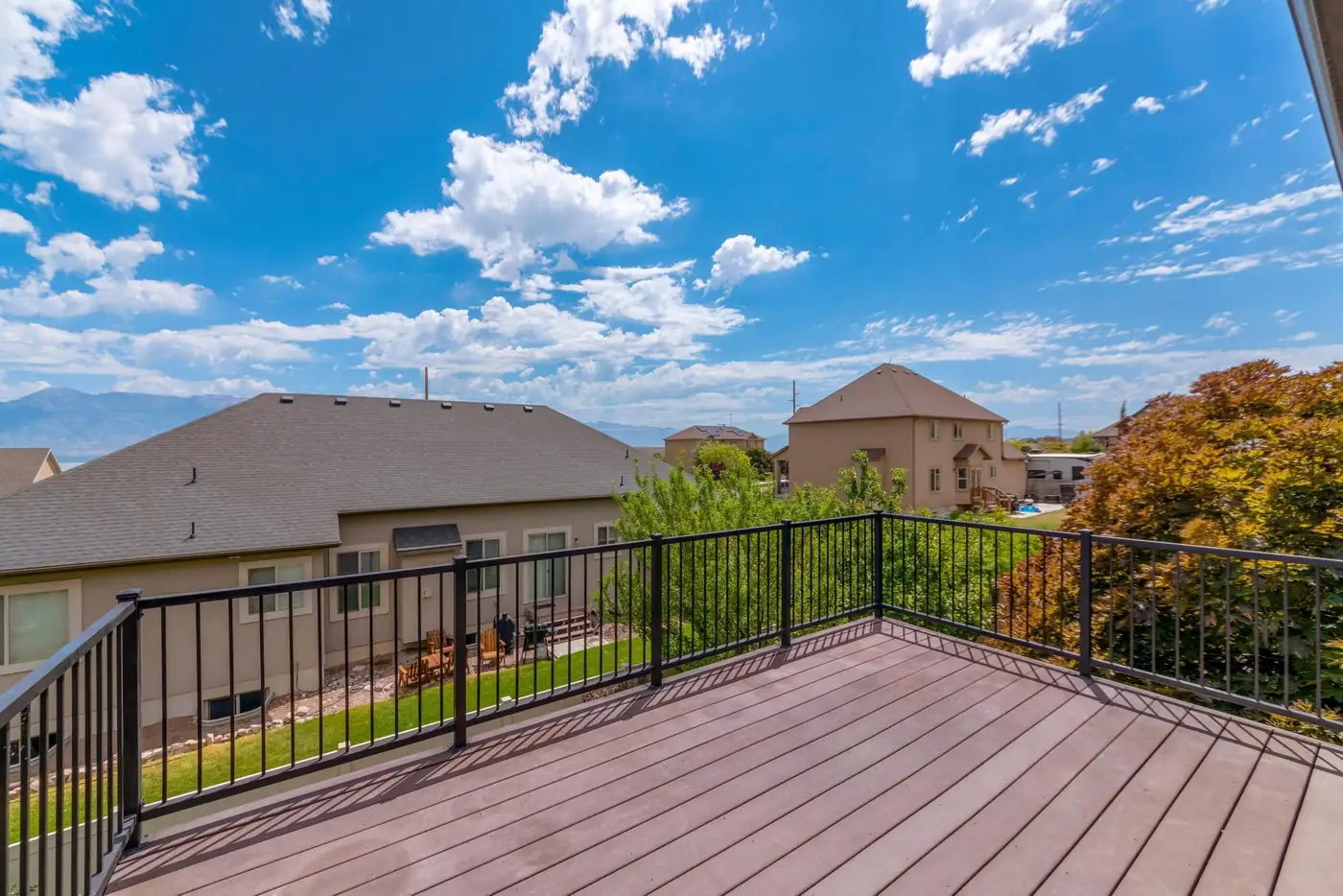
Composite Deck Builders in Nashville, Where the Frame Matters as Much as the Board
A capped composite board is warranted for decades. The lumber holding it up is not, unless somebody builds it that way. Nashville Deck Builders installs composite and PVC decking across Middle Tennessee on substructures sized, spaced, and taped to last as long as the surface you paid for. Here is what actually separates one composite deck from another, and how to choose without relying on a showroom sample.
Capped, Uncapped, and PVC: Know What You Are Buying
“Composite” covers three different products, and the price gaps between them confuse more Nashville homeowners than any other part of the decision. Uncapped composite is the original stuff, a bare wood-flour and plastic blend with no protective shell. It is cheap, it stains, and we rarely recommend it. Capped composite wraps that same core in a hard polymer shell, and the shell is what delivers the fade, stain, and mold resistance the warranties are written around. PVC drops the wood content entirely: lighter, cooler underfoot, and immune to moisture, at a higher price.
There is also a newer mineral-based composite category that swaps wood flour for mineral filler, aimed squarely at the moisture and expansion complaints people had with the early boards. We will put samples from more than one of these families in your hands rather than the one a single supplier wants moved this quarter.
- Capped composite — the default for most Nashville decks, best balance of cost and durability
- PVC — poolside, hot tub surrounds, low decks near damp ground, and full-sun exposures
- Mineral-based composite — when dimensional stability in wide-open sun is the priority
- Uncapped composite — priced in only when a tight budget rules everything else out
The Board Lines Homeowners Ask Us For
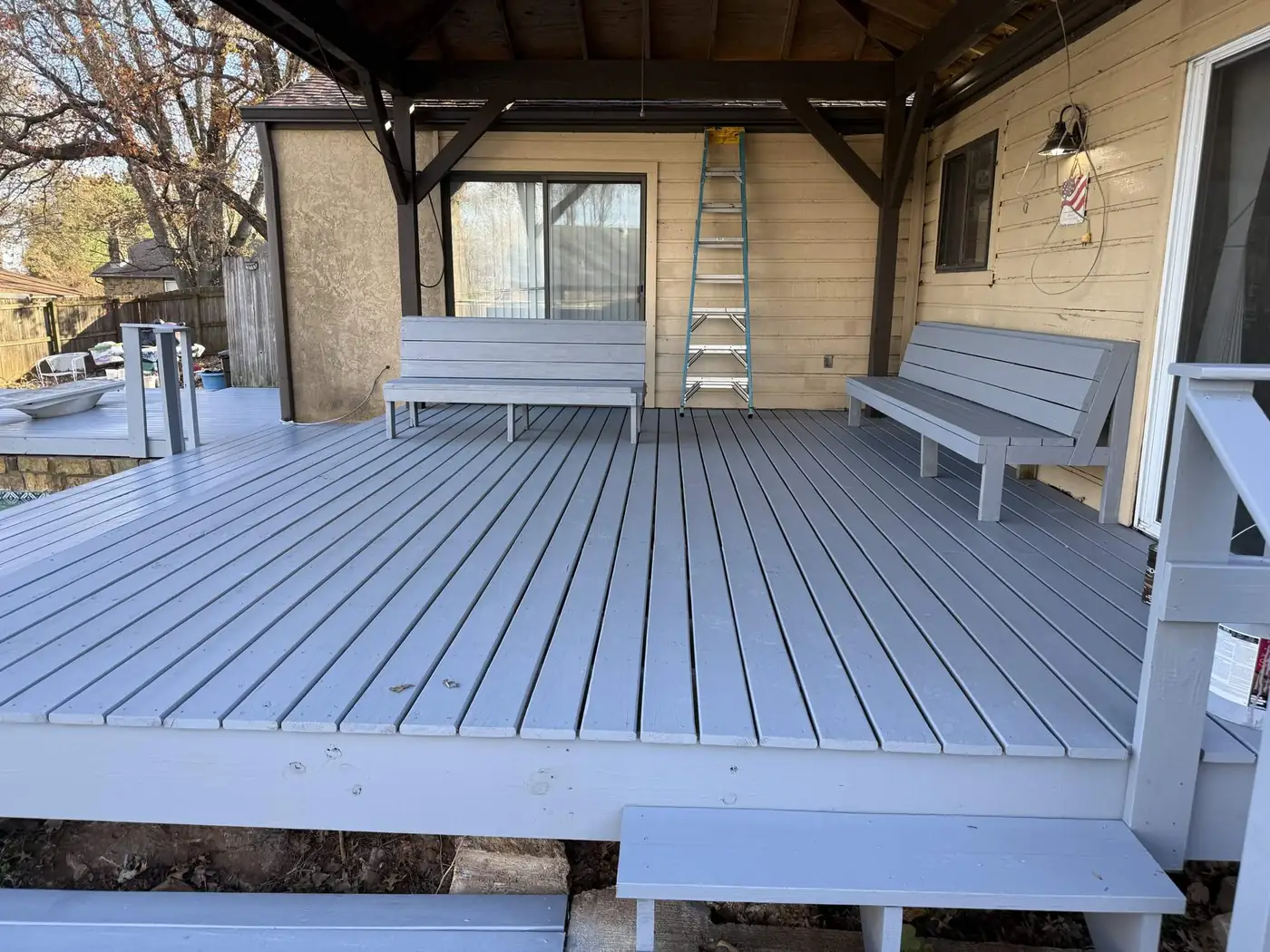
Nearly everyone arrives with a brand name already in mind — Trex, TimberTech, Fiberon, Deckorators. We build with all of those families, and the honest news is that within a given price tier the products are closer than the marketing suggests. What actually changes as you move up a manufacturer’s lineup is the cap: how far it wraps, how convincing the grain looks from three feet away, and how long the fade and stain coverage runs.
Entry tiers usually cap the top and sides but leave the underside bare, which is fine on an elevated deck nobody looks under. Mid tiers add better embossing and multi-tonal streaking so a twenty-foot run does not read as one flat color. Top tiers cap all four sides, which is what you want on stair treads, picture-frame borders, and any board with a visible edge.
- Good, better, and best boards priced side by side in the same quote
- Full-length samples set on your actual deck, in your actual light, before you commit
- Warranty terms read out loud, including what fade and stain coverage does and does not include
- Color runs and lot matching handled at order, not discovered at install
Tennessee Sun, Board Color, and the Question Nobody Asks in the Showroom
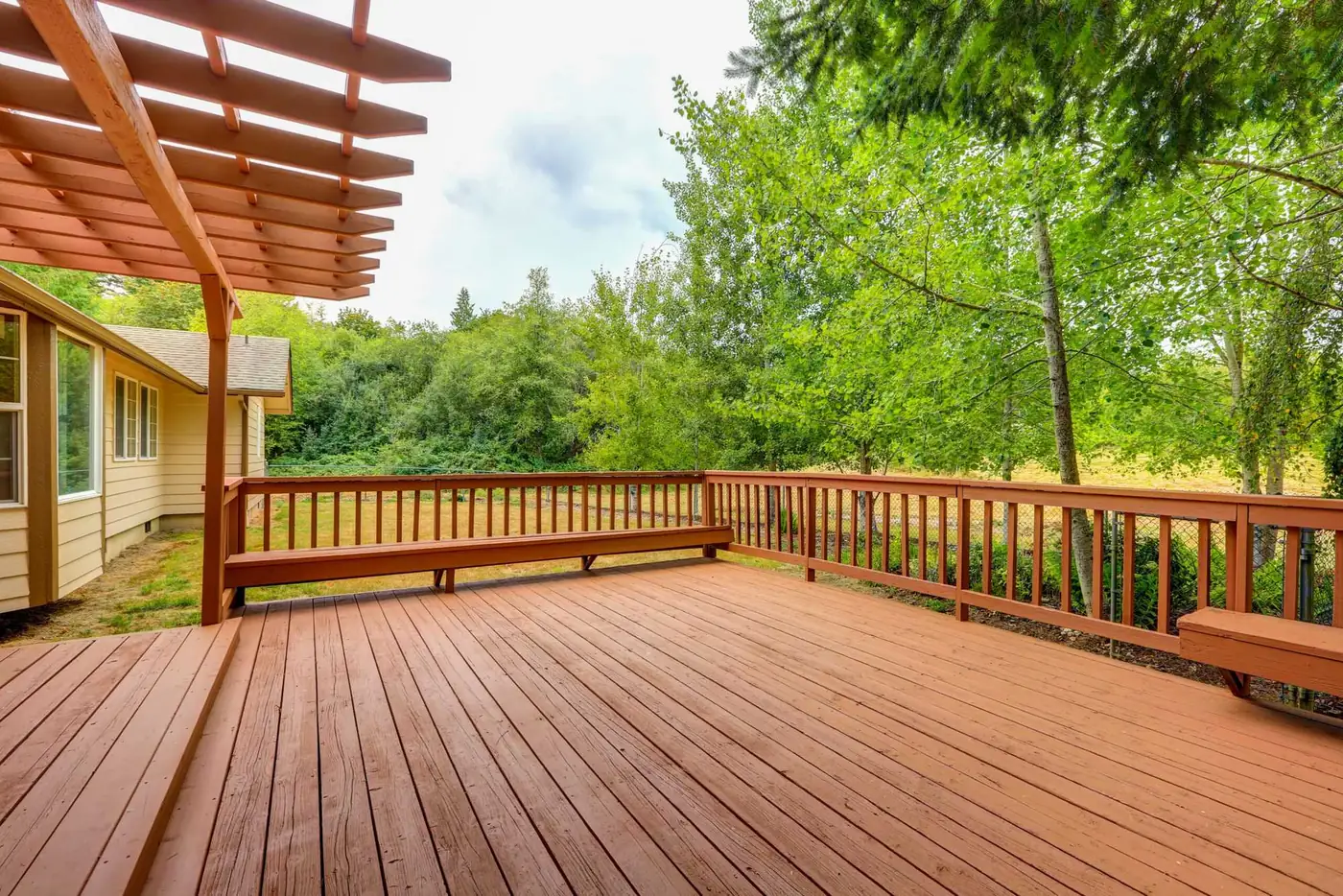
Middle Tennessee gives you long, humid summers and a lot of unshaded western exposure. That combination makes two things matter more here than in a catalog photo: surface temperature and how the board handles standing moisture in shade.
Color drives temperature. A dark espresso board in full afternoon sun will be meaningfully hotter underfoot than a light gray or driftwood in the same position — the same physics that makes a black car door hard to touch in July. If your deck faces south or west with no cover, we push you toward lighter tones or a line specifically engineered for heat, and we would rather have that conversation before the order than after your first barefoot August.
Shade is the opposite problem. Under tree cover a composite deck stays damp, and wet leaf and pollen film feeds the surface mold homeowners blame on the boards. The fix is drainage and airflow at the frame, not a stronger cleaner, which is why we care about board gapping and ventilation under low decks.
The Frame Under a Twenty-Five-Year Board
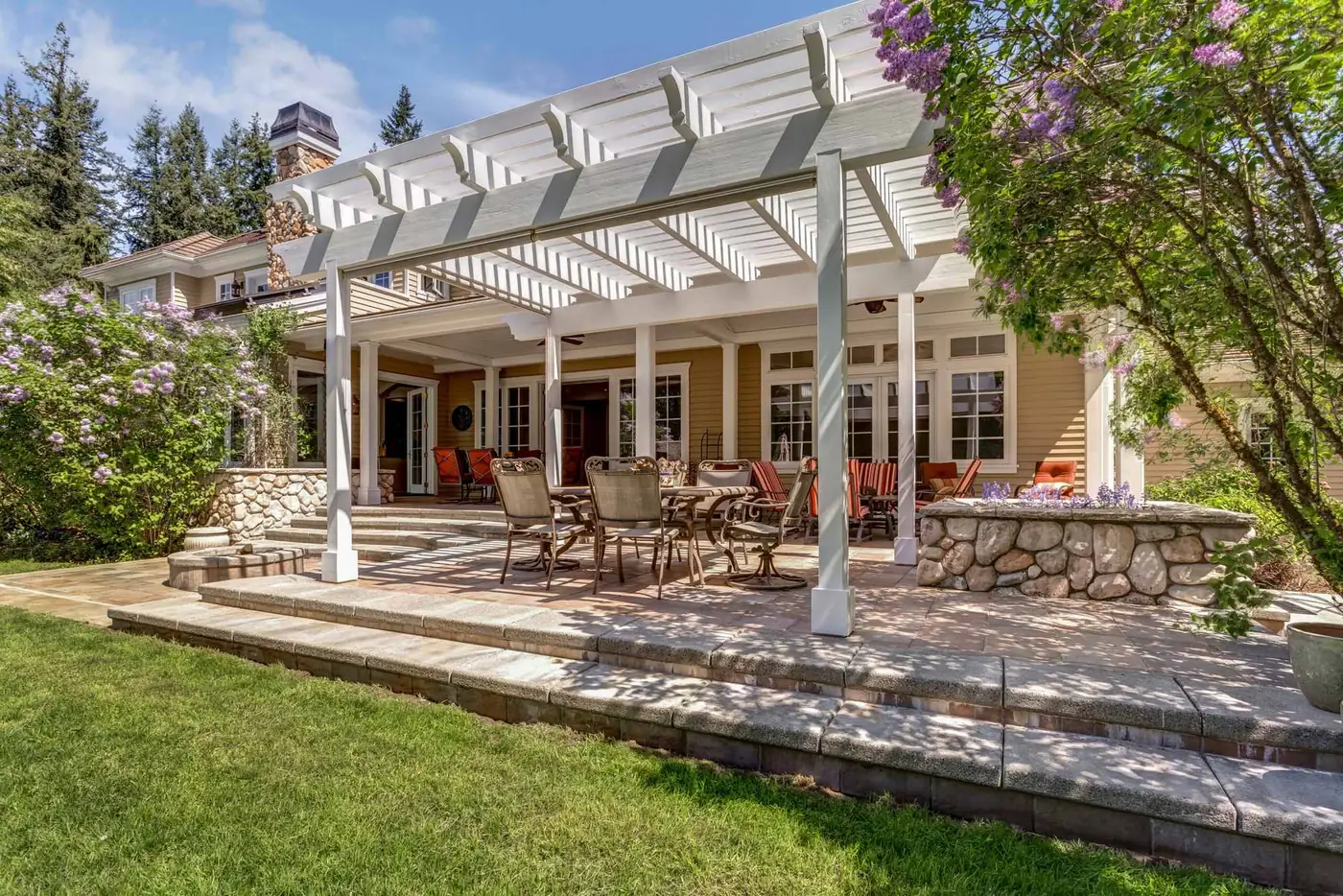
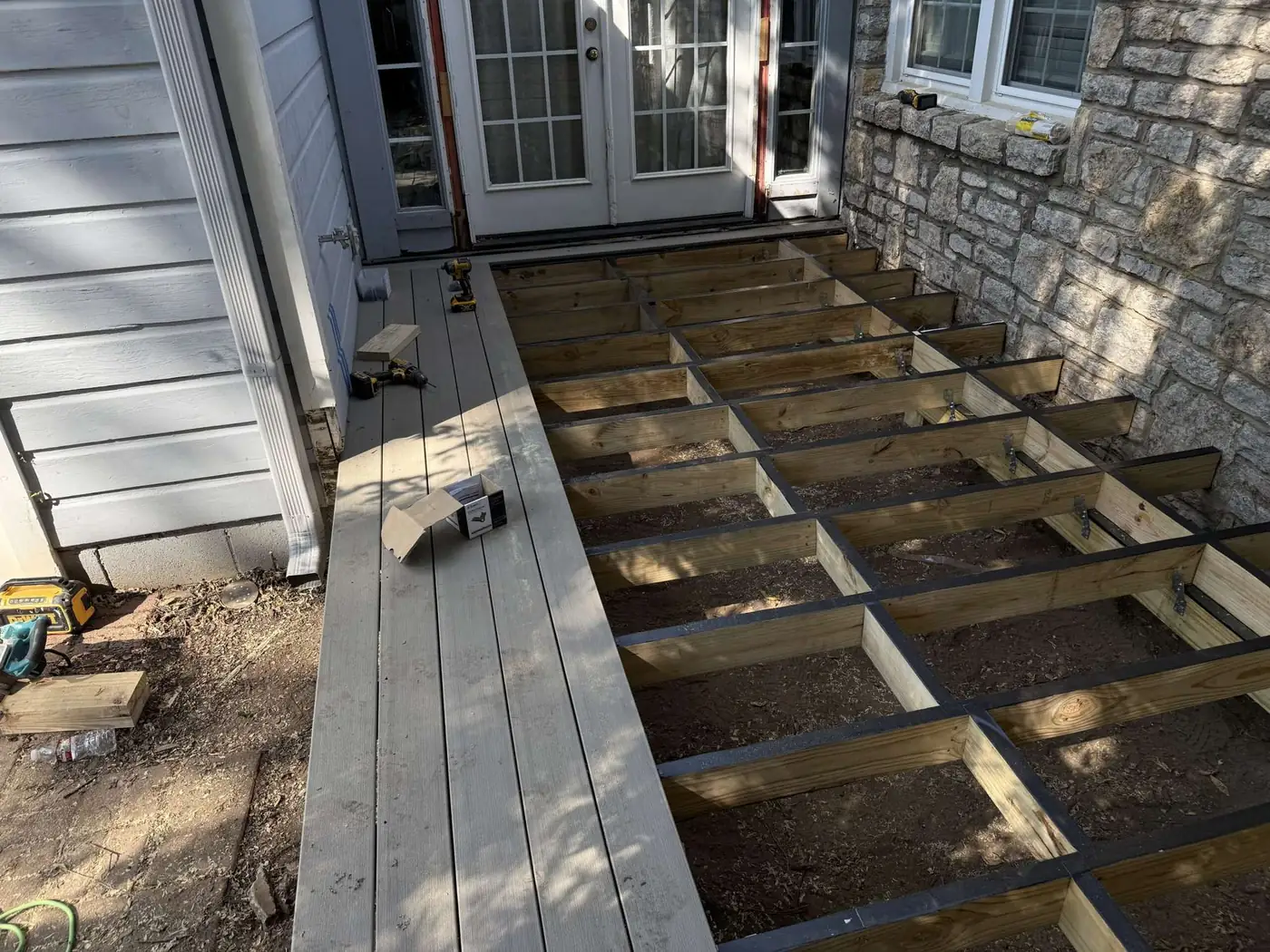
This is where composite decks quietly go wrong. The boards carry a decades-long warranty; the pressure-treated frame under them does not, and no warranty covers a surface that has to come off because the joists failed first. Composite is also heavier and less rigid than wood, so it telegraphs every flaw in the structure underneath.
Two numbers do most of the work. Joist spacing: most composite requires 16 inches on center for a straight lay and 12 inches for a 45-degree diagonal, and plenty of older Nashville decks were framed at 24. Gapping: composite expands and contracts along its length with temperature, so end gaps and butt joints get set to the manufacturer’s spec for the install-day temperature, not eyeballed.
- Joist spacing set to the board manufacturer’s requirement, including tighter spacing for diagonal layouts
- Joist tape over every joist and beam top so fastener holes stop holding water
- Blocking at picture-frame borders and every butt joint, because composite will not span what wood forgives
- Ledger flashed and through-fastened to structure, the single detail that protects the house
- Footings sized for the load and poured below frost depth, never set on surface blocks
Three Details That Decide Whether It Looks Built or Assembled
Hidden Fasteners
Clips seated in the board groove leave a surface with no screw heads in it. They also control gapping automatically, which is half the reason a finished field looks straight. We face-screw only where structure demands it, and we plug it when we do.
Picture-Frame Borders
A border board around the perimeter hides every cut end and gives the deck a finished edge instead of a sawn one. It needs extra blocking underneath to land on, which is exactly why cheaper bids leave it out.
Railing That Matches the Investment
Powder-coated aluminum, cable, and composite railing all pair with composite decking, and railing is a bigger share of the budget than most people expect. We price the options separately so you can see what each one costs before choosing.
Composite Decking Questions, Answered Straight
Does composite decking get too hot in Tennessee summers?
Any decking gets hot in full August sun, and dark composite gets hotter than light composite. Color is the lever that matters most: a light gray or driftwood board runs noticeably cooler underfoot than a dark espresso in the same spot. If your deck faces south or west with no shade, we will steer you toward lighter tones or a line engineered for heat performance — and we will say so before you fall in love with a dark sample.
What is the difference between capped composite and PVC decking?
Capped composite has a wood-and-plastic core wrapped in a polymer shell. PVC has no wood in it at all. The cap is what resists stains and fading on both, so day to day they behave similarly. PVC is lighter, runs slightly cooler, and shrugs off moisture completely, which makes it the safer pick for poolside and low decks close to damp ground. Capped composite feels more solid underfoot and usually costs less.
Can I put composite decking on my existing deck frame?
Sometimes, and it is always worth checking. Composite is heavier and less rigid than wood, so the frame has to be sound and the joist spacing has to be right — many older Nashville decks were framed at 24 inches on center, which is too wide for most composite. We inspect the framing, measure the spacing, and tell you whether resurfacing works as is, needs joists added, or is not worth doing over that structure. See deck replacement and resurfacing for how that job runs.
How much does a composite deck cost in Nashville?
Composite generally runs about $55 to $85 per square foot installed in the Nashville area, with board tier and railing choice moving the number more than anything else. Elevated and multi-level builds sit above that range. Our Nashville deck cost guide breaks the ranges down by material and project type, and the real number for your yard comes from a site visit and a written quote.
Does composite decking fade or scratch?
Modern capped boards hold color far better than the uncapped composites sold twenty years ago, and most carry long fade and stain warranties. They are not indestructible: dragging a steel fire pit or a grill across the surface can leave a mark, and that mark does not sand out the way it would on wood. Felt pads under furniture and a mat under the grill handle nearly all of it.
What maintenance does a composite deck actually need?
Sweep it, and wash it once or twice a year with soap, water, and a soft brush. No sanding, no stripping, no stain. In shaded Middle Tennessee yards the real chore is keeping leaves and pollen from sitting wet on the surface, because that organic film is what grows the mold people blame on the boards.
Composite or wood — which is right for my deck?
Budget and time horizon decide it. If you are staying put and never want to hold a stain brush again, composite wins over ten years even though it costs more on day one. If the deck is small, the budget is tight, or you like the look and feel of real lumber, pressure-treated or cedar is a legitimate choice. We build both — compare on our wood deck building page and we will quote both side by side.
See Real Boards in Your Own Backyard
We bring samples to the site, walk the frame or the footprint, and hand you a written quote with the board line, the railing, and the substructure spelled out. No showroom lighting, no drifting estimate. Serving Nashville, Franklin, Brentwood, Hendersonville, Mount Juliet, Murfreesboro, and the rest of Middle Tennessee.
Price Your Composite Deck in Writing
Tell us the rough size and the boards you have been eyeing, and we will price your composite build against wood so you can see exactly what the upgrade costs — one written number, no drifting estimates.
Prefer to talk? Call (615) 468-0133